






The U.S. Air Force, amid controversy and public outcry, has decided to significantly scale back its proposal to use state forests in Northwest Florida for special operations and aircraft training.

The decision by the Air Force was made based on input from the public, local Native American tribes, along with Federal, State and local government agencies. The proposal would have called for broad use of Blackwater River and Tate’s Hell State Forests by the Department of Defense for training activities, including low-terrain aircraft maneuvers, surveillance operations and opposing forces operations, which are meant to emulate asymmetric warfare scenarios commonly found in current U.S. military conflicts overseas.
The effort by the defense department to utilize state forest lands began in 2011, when the elite 7th Special Forces Group relocated from Fort Bragg, N.C. to Eglin Air Force Base. The group is charged with training for and deploying into highly sensitive environments to conduct special operations mission around the world.
Initially, the unit said the more than 500 acres it was allotted at Eglin was sufficient. However, less than a year after the group’s relocation, the unit began quietly obtaining permits from the state to hold exercises in Blackwater River State Forest, according to the Florida Forest Service. The Air Force, which owns nearly half a million acres of airspace and land across Northwest Florida, said there wasn’t enough room to adequately accommodate the green berets and weapons testing. Much of the reason for the lack of space for the green berets and special operations units stems from the required airspace required by the F-35 Joint Strike Fighter program based at Eglin.

In late 2012, the Pentagon and Florida Agriculture Commissioner Adam Putnam signed a memorandum of agreement to allow the DoD to seek a use for “expanded training opportunities in Northwest Florida.” Florida Gov. Rick Scott echoed this support, committing to the military’s plans to use state forests. At the time Scott said of the plan, “This important project is both a benefit to our military, and to our economy.”
By the end of the 2012, a draft agreement between the state and the military stated the Air Force would agree to pay a “yearly user fee” of $382,000 to hold maneuvers and training activities in the forests.
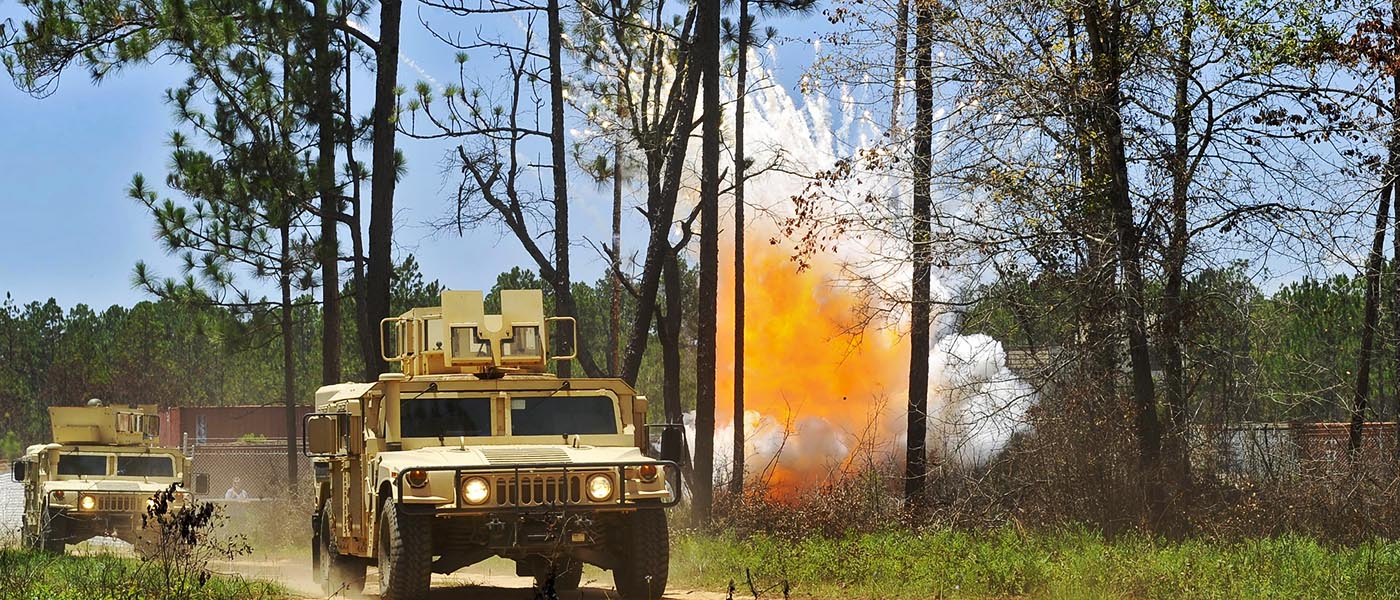
In August 2013, the Air Force hosted multiple public meetings Milton, Blountstown and Apalachicola to discuss its plans. Attended by Pentagon officials, the meetings resulted in vocal criticism, but were also supported by members of the public. Most concerns and opposition to the proposed use of the state forests were due to fears of limited recreation access and noise produced by the training operations, which at the time included use of humvees, low-flying aircraft and simulated explosions.

According to Air Force officials, the decision by the Air Force means that the defense department must request permission for the Florida Forest Service to perform a “more limited set of specific training and emitter activities from its partner agencies.” Specifically, the decision reduces the amount of training, frequencies, and geographic extent of training that will be requested to reduce the potential for recreational conflicts identified by the public and the potential for environmental impacts.
These differences in allowed activities versus the proposed use include:
- Use of up to 11 emitter sites versus 12
- Restricts landing zone operations to 16 specific locations versus other locations across Blackwater River State Forest or Tate’s Hell State Forest
- Use of expendable training munitions is restricted to BRSF hardened campsites for a maximum of 60 days per year; no use of munitions at THSF
- Reduces helicopter insertions and extractions to twice per year
- Reduces use of temporary combat support areas to twice per year
- Reduces static line personnel drops to quarterly at one landing zone located at BRSF; equipment drops to two landing zones and up to 40 days per year
- Dismounted movements restricted to one maneuver corridor between Blackwater Airfield and hardened former Short-Term Offender Program (STOP) campsite versus across the state forests
- No blackout driving operations
- No obstacle emplacement operations
- No bivouacking or establishment of assembly areas
- No amphibious operations
- No natural resource consumption

Air Force officials have said additional limitations could also be imposed by the state for any future permits issued to the Air Force for training operations within the boundaries of the state forests. Officials have said this decision will allow the Air Force to approach the Florida Forest Service and the Florida Fish and Wildlife Conservation Commission to explain what activities they’d like to do. Ultimately, any decision for militarized use of state lands lies with the forest service.